




This year in AI has been one of learning to keep up, adopting some technology that you find time for, and iterating on your solution. Some of you have also been asking yourselves, is it worth it, while for some others, it's been about doubling down to deploy the solutions in production. We have seen AI advance at a breathtaking pace. The latest breakthroughs include frontier AI models like GPT‑5.2, Gemini 3, Claude 4.5, and Grok 4.1 that push reasoning, multimodal capabilities, and massive context windows, alongside data center advances in AI‑optimized chips, liquid cooling, and mega‑projects worth $130B to handle surging compute demand. As far as software infrastructure goes, we have advanced from RAGs needing graphs, to agents, and needing AI memory in just a few months.
With so much on the line and so much more to come in 2026, who better to learn from than the people who are on the front line to make crucial decisions for their organizations that in turn impact all of us. Therefore, we reached out to the leaders spearheading AI transformation in their organizations to gather their thoughts on what went right with AI in 2025, what didn't get enough attention, what were some non-AI things affecting our lives, and to discuss any mismatches in our understanding or use of AI. These leaders are from different industries and as such, best window into what’s happened in real lives (not the promotional lives we hear most often about), and what to expect in the coming year and beyond. Let’s read their thoughts then, shall we?
AI in Retail and Inspection
Matthias Spycher, CTO at Fanatics Commerce has seen a wide range of use cases given Fanatics not only sells officially licensed sports merchandise but also manufactures them which means, they still have machine learning for visual inspection on factory floors to agentic responses when suggesting products to their customers. Here is what Matthias had to say about AI:
Q: What went right with AI in 2025?
A: Our understanding of how to use this technology is improving. For example, we can better assess whether a given business process can benefit from the application of AI. We're also learning that taking a platform-based approach that gives us the flexibility to choose a model that best suits a given problem leads to good outcomes.
Q: What didn’t get enough attention in 2025 but should — and will — pick up momentum in 2026?
A: We need to pay more attention to the potential security challenges that AI poses. While there are many opportunities to increase productivity with this new technology, the attack surface for bad actors also increases as we deploy more AI-enabled applications. This is another reason why we're doubling down on a platform-based approach that centralizes governance and monitoring capabilities.
Q: What is one non‑AI thing at work that leaders should pay attention to?
A: The changing regulatory environment as it relates to tariffs has been a challenge for companies that trade internationally. It will likely continue to pose a challenge as we head into 2026, regardless of how the supreme court rules on the matter.
Q: Where do you see the biggest mismatch between how people use AI and how AI systems actually work under the hood? How is that mismatch shaping risks or wasted potential?
A: The non-deterministic behavior of AI systems can throw some people off and quickly tarnish the reputation of a given technical solution involving AI. It's important to set expectations ahead of time so users can familiarize themselves with this new technology and gradually come to appreciate its benefits.
AI in Supply Chain and Transportation
Stephanie Cannon, Vice President, Global Digital IT at FedEx, is no stranger to operating in a global context with hundreds of constraints and a constantly evolving environment, not just in tech but also in global strategy. Bridging the gap between those while leading a large organization to attain the best returns from a constantly evolving technology is not for the faint-hearted. Here is what she had to say about AI:
Q: What went right with AI in 2025?
A: Breakthroughs around Agentic AI have been huge in 2025. The ability for AI systems to operate autonomously around planning and executing tasks without constant human intervention, especially around getting information from suppliers for companies is amazing. Also, major technologies are being created with AI for example, in orchestrating workflows across companies supply chains, and this is making decision-making faster than ever.
Q: What didn’t get enough attention in 2025, but should — and will — pick up momentum in 2026?
AI Governance as capabilities have grown so fast, frameworks for transparency, accountability, and ethical use lagged behind but you have seen the EU start to create governance around this but the US has not. I expect this to get a lot of attention in 2026.
Q: What is one non‑AI thing at work that leaders should pay attention to?
Talent adaptability. The pace of AI and technology changes is fast for companies. Leaders need to focus on building cultures that embrace continuous learning and rapid change, rather than rigid hierarchies and training teams on AI and how to use it. For instance to speed up development of technology with use of AI tools. Talent strategies do need to be rethought in most companies.
Q: Where do you see the biggest mismatch between how people use AI and how AI systems actually work under the hood? How is that mismatch shaping risks or wasted potential?
The biggest gap is that people often think AI gets context like a human does, but it does not. It's based on the data it's fed and probabilistic outcomes. That misunderstanding can lead to blind trust by humans where folks hand over big decisions without double-checking, and this could create massive costs or mistakes for companies.
AI in Media and Entertainment
TV, movies, music, are all inseparable parts of most of our lives! The data is so innately multimodal and large scale, that there is so much AI can unlock when it comes to the media and entertainment industry. Manasvi Sharma, SVP Technology, Gracenote, is the perfect person to learn from, given his range of experiences from large scale retailers foraying into AI for better customer experience to now media and entertainment tackling AI at a much larger scale.
Q: What went right with AI in 2025?
A: I would say the following:
- Conversation to some extent shifted from larger and larger models to more efficient models, more accurate and more purpose built models
- Still in the realization stage - but people are looking and some pockets of them are now focusing on productionizing AI instead of just doing pilots which is also driving the first point.
- There is an understanding now that it is not a very quick win. There is effort and deliberation needed to make it successful in complex use cases. Just using the best LLM and getting results back doesn't work.
Q: What didn’t get enough attention in 2025, but should — and will — pick up momentum in 2026?
A: Here are things at the top of my mind when considering what should have received more attention but didn’t
- Memory is definitely one. Also, paying attention to overall architecture, when it comes to scalable architectures using AI and LLMs and other models, so they can evolve beyond PoCs. The same is true with how memory modeling will specifically evolve. It has not received enough attention yet. But as people are hitting production and trying to scale AI in real enterprise use cases, realization in how do you manage memory, is there a need for specialized memory, backbones to things, what are the right architectures to build upon will continue to get a lot more attention.
- Another thing that's so important and not gotten enough attention - evaluation, observability, and regulatory aspects to AI - all those will come from productionizing efforts as well.
- Risks around synthetic media are way underestimated. People have not looked at it enough from a tech standpoint, more a hype standpoint. Assessing the quality of it. Detection of what is AI , what is not AI is still early.
Q: What is one non AI thing at work that leaders should pay attention to?
A: Human connections, particularly emotional ones, are extremely important. It is very important to put in place a very strong thought process around what is touching the consumer, customer journeys, support, and helping people out in physical spaces. There is a sentiment that AI should replace everything which is wrong. We are not putting enough value to actual human connections. This will affect experience drastically and it's not measurable in spoken language since there is no replacement for actual humans.
Q: Where do you see the biggest mismatch between how people use AI and how AI systems actually work under the hood? How is that mismatch shaping risks or wasted potential?
People think about it as a deterministic system but the probabilistic nature of decision making is much closer to how humans decide. We are working with computers but now there is a margin of error. When people are thinking about products and pipelines, that's getting missed. Another thing to note is that leaders are looking at AI for cost optimization rather than growth optimization. You have to use AI to enter new areas than cost optimizing existing ones, that focus has to shift . That's how AI promises on tech, digitization in areas left behind and bringing in more consumer experiences in near term and medium term. Leaders have to very deliberately look at growth in new areas.
E-commerce and Personalization
When it comes to retail and e-commerce, AI can offer the very edge needed to bring in new customers by enabling wonderful experiences and holding on to the existing ones with better personalization. We asked Cody Wang, Senior Manager of Data Science, The Home Depot for his thoughts and insights since Home Depot is very much at the cutting edge of adopting new technologies, explaining its loyal customer base.
Q: What went right with AI in 2025?
A: Using AI to improve productivity, especially to reduce efforts for repetitive tasks; less hallucination and higher quality with generation tasks; agentic frameworks
Q: What didn’t get enough attention in 2025, but should — and will — pick up momentum in 2026?
A: Automation and pipeline building
Q: What is one non‑AI thing at work that leaders should pay attention to?
A: What do humans bring that could not be replaced?
Q: Where do you see the biggest mismatch between how people use AI and how AI systems actually work under the hood? How is that mismatch shaping risks or wasted potential?
A: Confidence level of AI output vs. what the numbers truly mean
What's Coming in 2026: The Momentum Builders
The consensus among leaders highlights a critical shift from basic deployment to robust, scalable, and responsible AI systems. The following areas are expected to gain significant traction:
Productionizing AI
As companies move beyond Proofs of Concept (PoCs), attention will turn to building scalable, production-ready architectures that integrate LLMs and other models effectively, including specialized backbones and systems. This includes:
- Automation and Pipeline Building: Increased focus on building robust automation and pipelines to support AI workflows.
- Security, Evaluation and Observability: Robust methods for securing protocols that are getting deployed, evaluating AI output quality, monitoring performance, and ensuring compliance will become standard practice.
- Addressing Synthetic Media Risks: Expect increased scrutiny and technological focus on assessing the quality of synthetic content and developing reliable detection mechanisms.
The Architectural Necessity: Memory
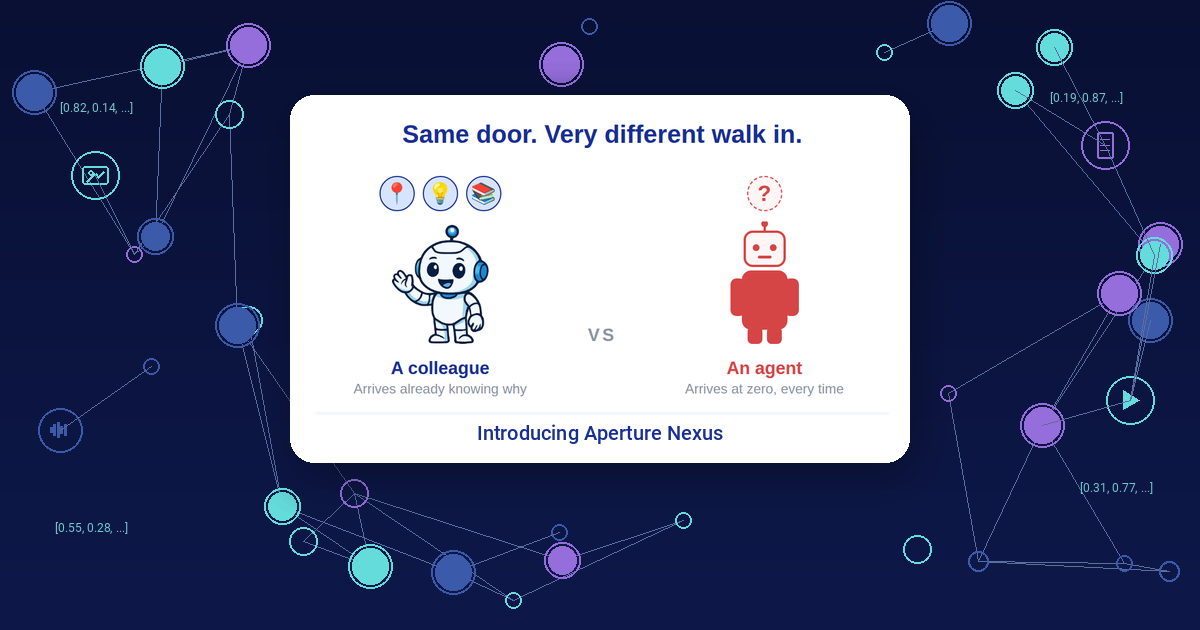
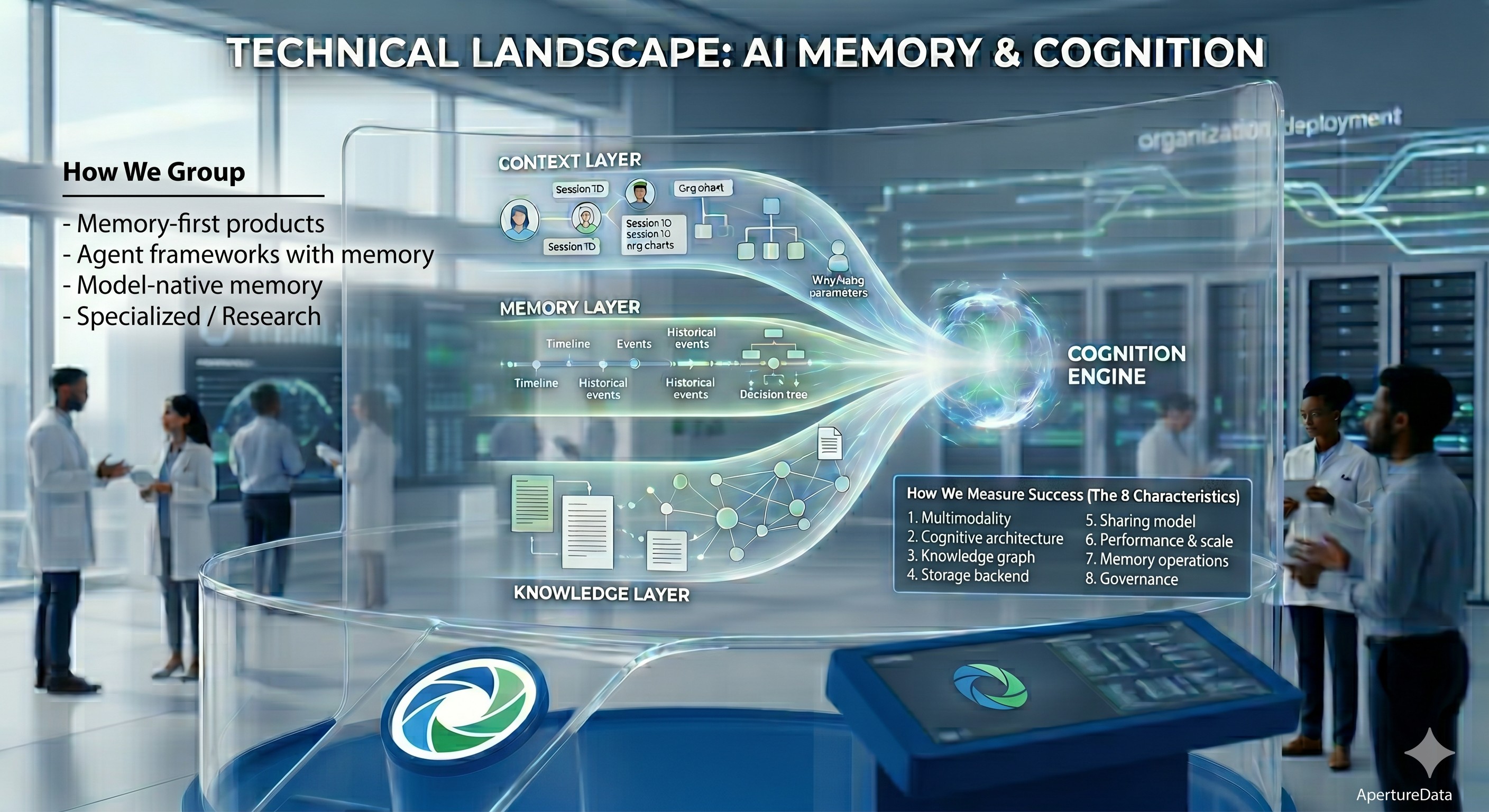
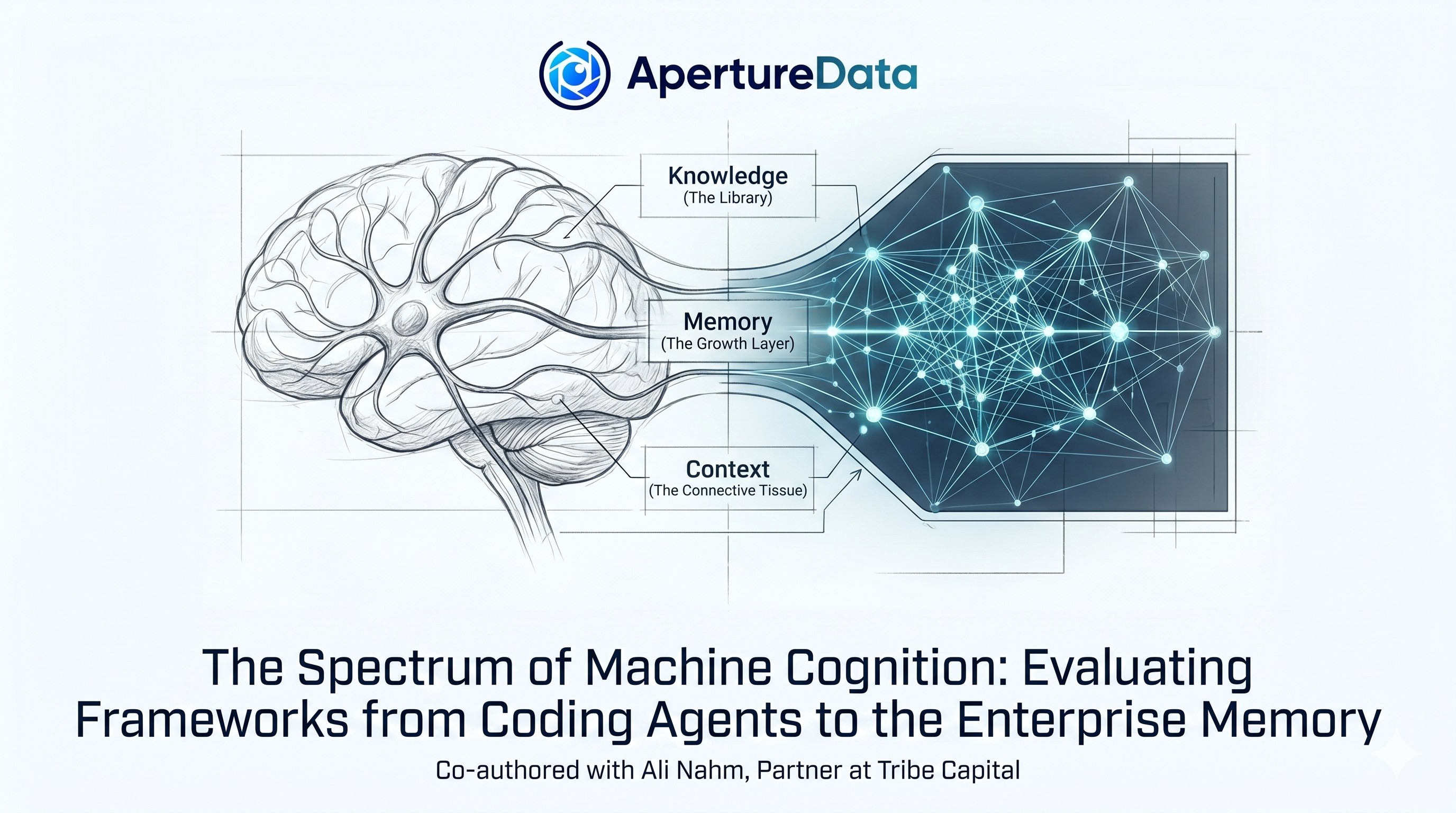
The necessity for specialized memory and better overall architectural modeling will become paramount. As stated, memory is definitely one area that will pick up momentum in 2026, a necessity we are addressing head-on at ApertureData. Enterprise use cases demand AI systems retain and use context over much longer periods and interactions. This necessity is driving investment and development in advanced memory systems, because we can, and because we need to build it to realize the full potential of AI in complex, real-world scenarios, a challenge central to ApertureData's mission.
Governance and Compliance
Following early moves by bodies like the EU, the US and other regions are expected to focus heavily on creating frameworks for transparency, accountability, and ethical use of AI to manage rapidly expanding capabilities. This is driven by the realization that AI Governance has lagged significantly behind capability growth.
Talent and Culture
Leaders will be forced to overhaul talent strategies to prioritize continuous learning and rapid adaptability, ensuring teams are equipped to utilize AI tools to accelerate development and maintain competitiveness. A key focus will be on defining and preserving the essential human elements of the workforce and customer experience.





.jpeg)



.png)


